South Floridians think we're used to the heat. But heat-related illness sends more seniors to emergency departments every summer than most families realize — and the reasons are physiological, not carelessness. Aging bodies handle heat differently, and several of the most common medications for seniors make it measurably worse.
Why heat hits seniors harder
- Thirst signals weaken with age — by the time an older adult feels thirsty, they're often already dehydrated.
- Sweating becomes less efficient, so the body's main cooling system underperforms.
- Common medications interfere: diuretics ("water pills") accelerate fluid loss; beta-blockers blunt the heart's response to heat; some antidepressants and antihistamines reduce sweating. Nobody should stop a medication because of summer — but families should know the risk is elevated.
The warning signs, in order
Heat exhaustion: heavy sweating, weakness, dizziness, nausea, headache, cool clammy skin. Move to AC, cool with wet cloths, sip water. If it doesn't improve within 30 minutes, seek medical care.
Heat stroke — call 911: confusion or altered behavior, hot dry skin (sweating may have stopped), rapid pulse, temperature of 103°F+. This is a life-threatening emergency. Cool aggressively while waiting for EMS.
In seniors, the first sign is often simply new confusion — which families mistake for a "bad day." In summer, treat sudden confusion as heat illness until proven otherwise.
Prevention that actually works
- AC is medical equipment in Florida. If cost is a concern, LIHEAP assistance exists — and one broken AC unit in August is a genuine health emergency for a senior living alone.
- Schedule water, don't wait for thirst — a glass with each meal and between meals, visible where you can verify it's being drunk.
- Shift outdoor activity to before 10 a.m. — gardening at noon in July is how well seniors end up in the ED.
- Daily check-ins during heat waves, ideally laying eyes on them, not just a phone call.
The role of monitoring
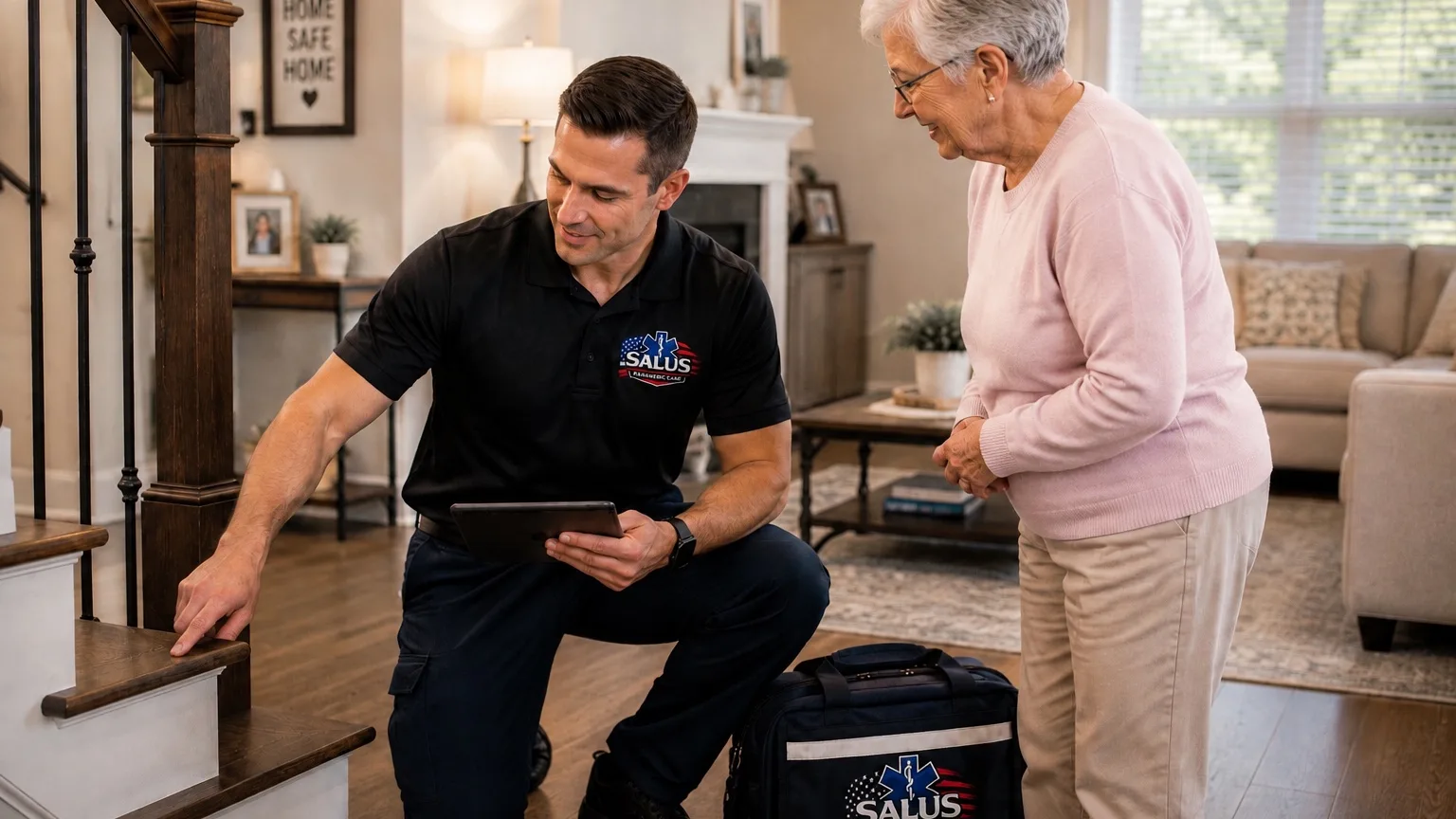
Dehydration shows up in the numbers before the crisis — blood pressure changes, elevated heart rate, weight drops. Salus wellness monitoring visits across Miami-Dade and Broward track exactly these trends all summer, and every visit includes practical heat-safety education tailored to the client's medications and home.
Key takeaways
- Aging blunts thirst and sweating; common senior medications amplify heat risk
- New confusion in summer = heat illness until proven otherwise
- Heat stroke (confusion, hot dry skin, 103°F+) is a 911 call
- Working AC and scheduled hydration are the two highest-impact preventions
Want experienced eyes on your loved one's health and home?
Salus Firefighter/Paramedics visit Miami-Dade & Broward homes to catch problems before they become emergencies. Memberships from $149/month · first visit just $99.
This article is general education, not medical advice. Always consult your loved one's physician about their specific health situation. In an emergency, call 911.