
Two names, one medicine
A brand-name bottle from a specialist and the generic refill from primary care sit side by side, and both get taken. Lining every container up is usually how the overlap surfaces.
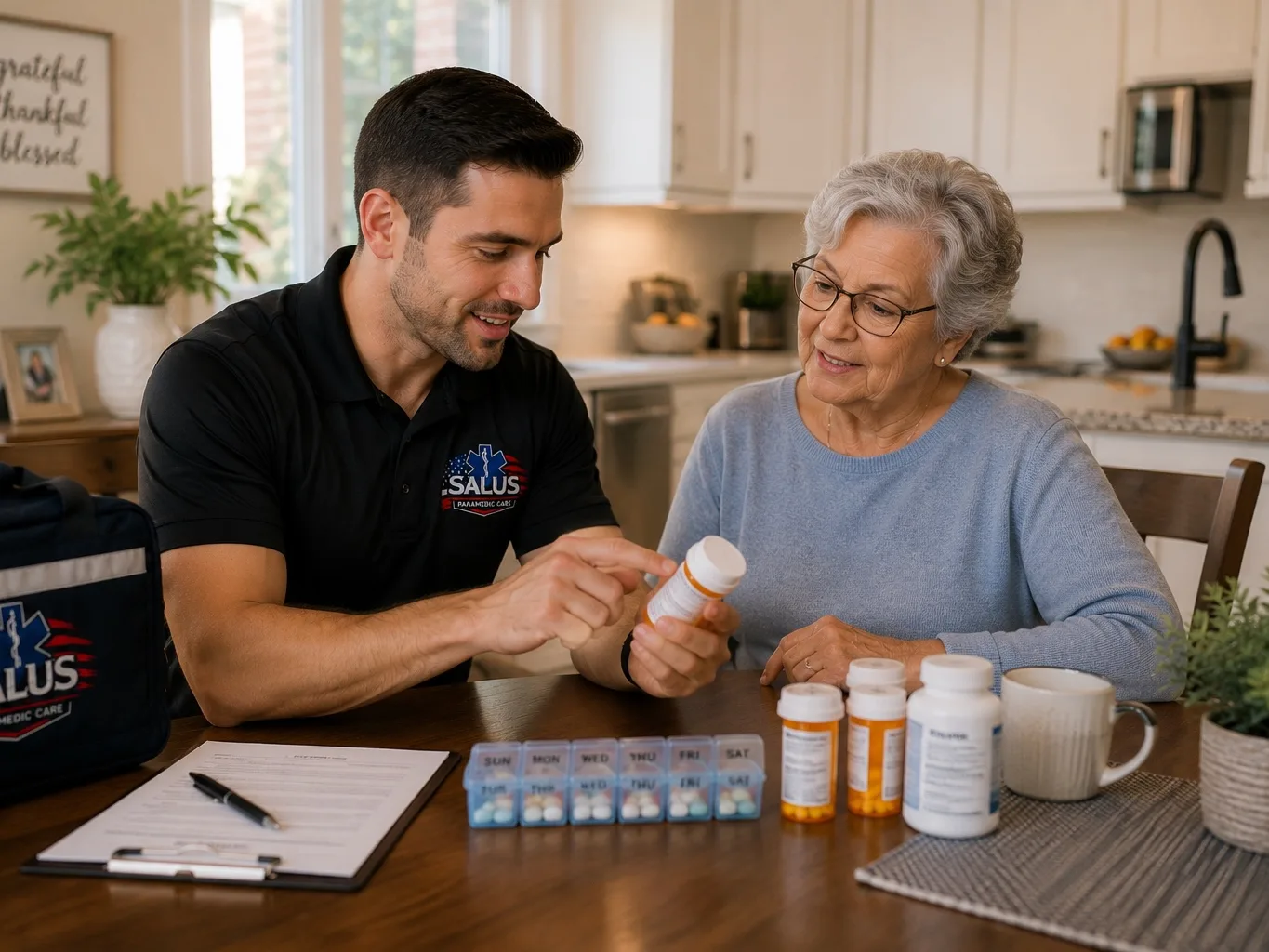
Medication problems are one of the most common preventable reasons older adults end up in the emergency department. During a Salus medication review, a licensed Firefighter/Paramedic sits down with your loved one and every medication in the house — prescriptions, over-the-counter drugs, and supplements — and checks the whole system: what's being taken, how it's organized, what's expired, and what needs a professional's attention.
The short answer
An in-home medication review is a visit where a Firefighter/Paramedic goes through every medicine in the house with the person taking it — prescriptions, over-the-counter products, supplements and topicals — and records what is actually being taken, how often, and what may be worth raising with their physician or pharmacist.
A pharmacy printout shows what was dispensed. The cabinet shows what is happening — the March refill still sealed, or a second bottle of the same drug under a different name. We work from the cabinet.
What we review
Included in all memberships · See all pricing →
Patterns we keep seeing
Different households, the same four issues — none of them unusual, all of them easier to sort out once somebody writes them down.
A brand-name bottle from a specialist and the generic refill from primary care sit side by side, and both get taken. Lining every container up is usually how the overlap surfaces.
Cabinets accumulate. A medicine a doctor stopped a year ago often stays in rotation because nobody at home was told to pull it. We read every date and ask about every container.
A dose skipped on a busy morning, a dose doubled after a forgotten one, a label nobody can read without glasses. We rework the organizer around the day this person actually has.
Certain pairings deserve a pharmacist's or physician's judgement. We do not make that call — we record exactly what we saw so the right professional gets asked.
Step by step
Follow-through
Anything we flag is written down and routed to someone who can act on it. With permission the summary is emailed to the family, so an adult child in another county reads the same page as the person in the room — and it is built to hand to the prescriber.
Reviews work better repeated. Families on recurring wellness monitoring visits get the list re-checked each time, and a review is standard in every post-hospital and post-ER follow-up, when discharge sheet and home cabinet most often disagree. It also runs inside a full in-home wellness assessment.
Being clear
We do not prescribe, and we do not start, stop or adjust a dose — not by a half tablet, not even when a family asks. We will not tell you a medicine is wrong for your loved one; that judgement belongs to the prescriber and pharmacist. This is not a pharmacist consultation.
Our visits are scheduled preventive care, booked in advance. They are not an emergency service and do not replace one. If something between visits looks like it could be an emergency, call 911 first.
Questions families ask
Never. We review, organize and document, then flag anything concerning to your loved one's physician or pharmacist, who make all medication decisions.
Nothing, ideally. Leave the containers where they normally live so we see the real storage habits. If a printed list or discharge sheet exists, have it out for comparison.
That is exactly when a review earns its keep. No single pharmacy sees the whole picture once refills are split, so building one combined list in the home is often how overlaps become visible.
Yes, and many do — by speakerphone during the visit, then by email. We cover Miami-Dade and Broward, including in-home preventive care in Hialeah.
Start with a $99 introductory visit — no membership required, no pressure, honest answers.