Discharge day feels like the finish line. In reality, it's the start of the most fragile month in an older adult's recovery. Nearly one in five Medicare patients returns to the hospital within 30 days — and many of those readmissions are preventable. They happen quietly: a new medication misunderstood, a follow-up missed, a warning sign explained away.
Before you leave the hospital
- Get the discharge summary explained, not just handed over. Ask: What changed in the medications? What symptoms mean 'call the doctor'? What symptoms mean 'call 911'?
- Confirm the follow-up appointment — ideally within 7 days. Patients seen within a week of discharge are significantly less likely to be readmitted. (AHRQ)
- Ask what equipment the home needs — and get it before arrival, not after the first close call.
The first 72 hours: the medication reconciliation
This is the single highest-risk moment. The hospital list and the home medicine cabinet almost never match. Old bottles say one thing, new instructions say another, and doubling or skipping happens easily. Lay out every medication in the house against the discharge list — or have a professional do a medication review — within the first few days.
Week one and two: watch the trends
- Daily weight (sudden gain can signal fluid retention after heart-related stays)
- Blood pressure and pulse if equipment is available
- Appetite, energy, and sleep — the "soft" signals that usually drift before a crisis
- Wounds and incisions: redness, swelling, drainage, or fever mean call the doctor today
The falls trap nobody mentions
Hospital stays cause deconditioning — days in bed cost real strength, especially past 70. The person coming home is measurably weaker than the person who went in, but the home hasn't changed to match. It's the perfect setup for a fall. Clear pathways, good lighting, and honest conversation about temporarily using a walker matter enormously in the first weeks.
What a post-discharge visit adds
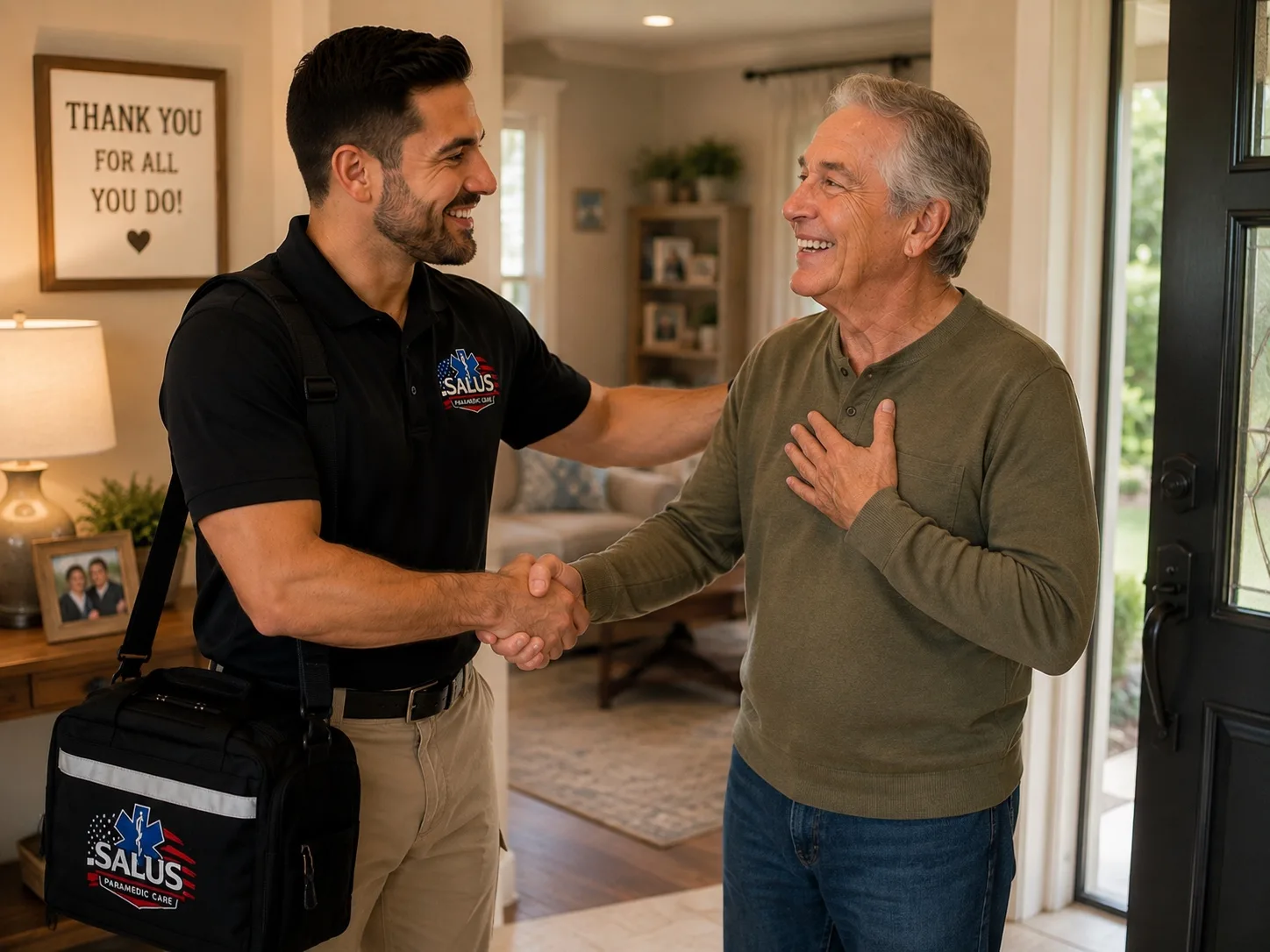
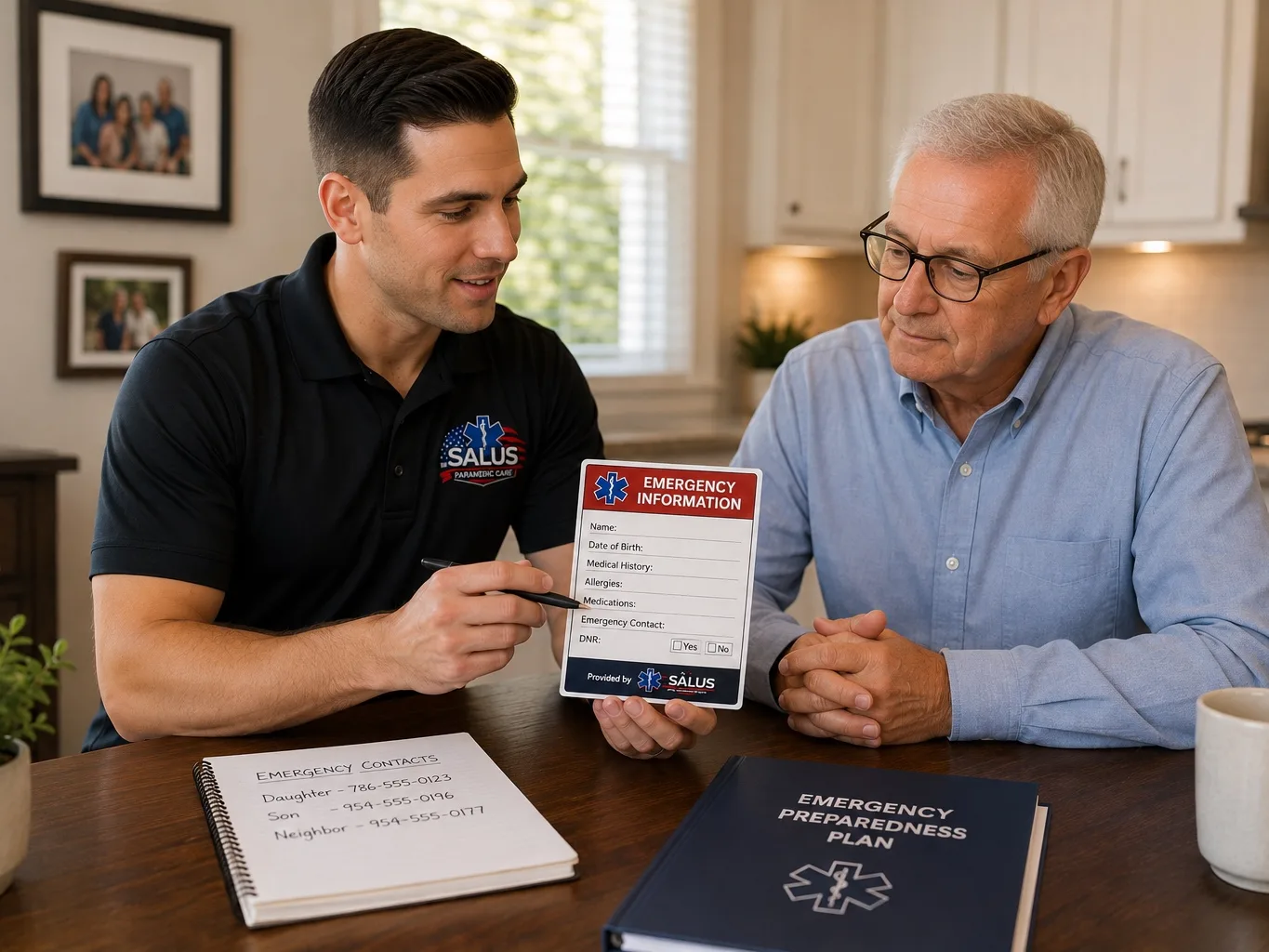
A Salus post-hospital follow-up visit brings an experienced Firefighter/Paramedic into the home during exactly this window: reconciling medications, checking vitals against the discharge baseline, screening for early warning signs, and making sure the recovery plan is actually workable in that home. Anything concerning gets flagged to the family and their doctors — before it becomes a readmission.
Key takeaways
- The first 30 days after discharge carry the highest readmission risk
- Reconcile medications within 72 hours — it's the #1 danger point
- See the doctor within 7 days of coming home
- Hospital stays weaken patients; the home must adapt for a few weeks
Want experienced eyes on your loved one's health and home?
Salus Firefighter/Paramedics visit Miami-Dade & Broward homes to catch problems before they become emergencies. Memberships from $149/month · first visit just $99.
This article is general education, not medical advice. Always consult your loved one's physician about their specific health situation. In an emergency, call 911.