Families researching help for an aging parent run into three similar-sounding options — home care, home health, and preventive paramedic care. They solve different problems, and many families end up needing a combination. Here's the plain-English breakdown.
Home care: help with daily living
Home care (non-medical) provides companionship and help with daily activities — bathing, dressing, meals, errands, light housekeeping. Caregivers are invaluable for day-to-day support, but they are not clinicians: they can notice that something seems wrong, but can't clinically assess what.
Home health: skilled care after a doctor's order
Home health delivers skilled clinical services — nursing, wound care, physical therapy — usually prescribed by a physician after an illness, surgery, or hospitalization, and often covered by Medicare for a limited period. It's treatment-focused: it exists because something already happened.
Preventive paramedic care: catching problems early
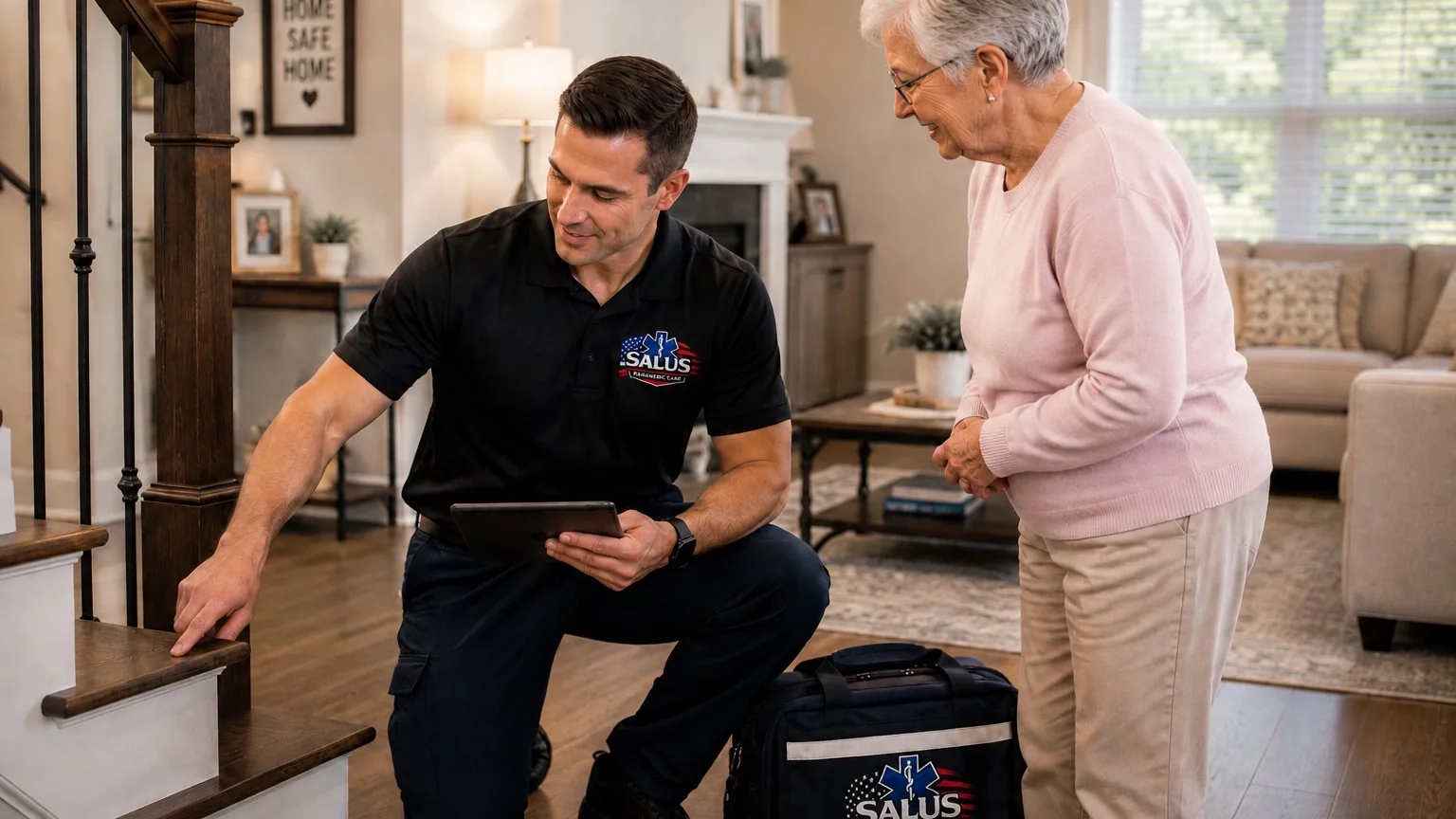
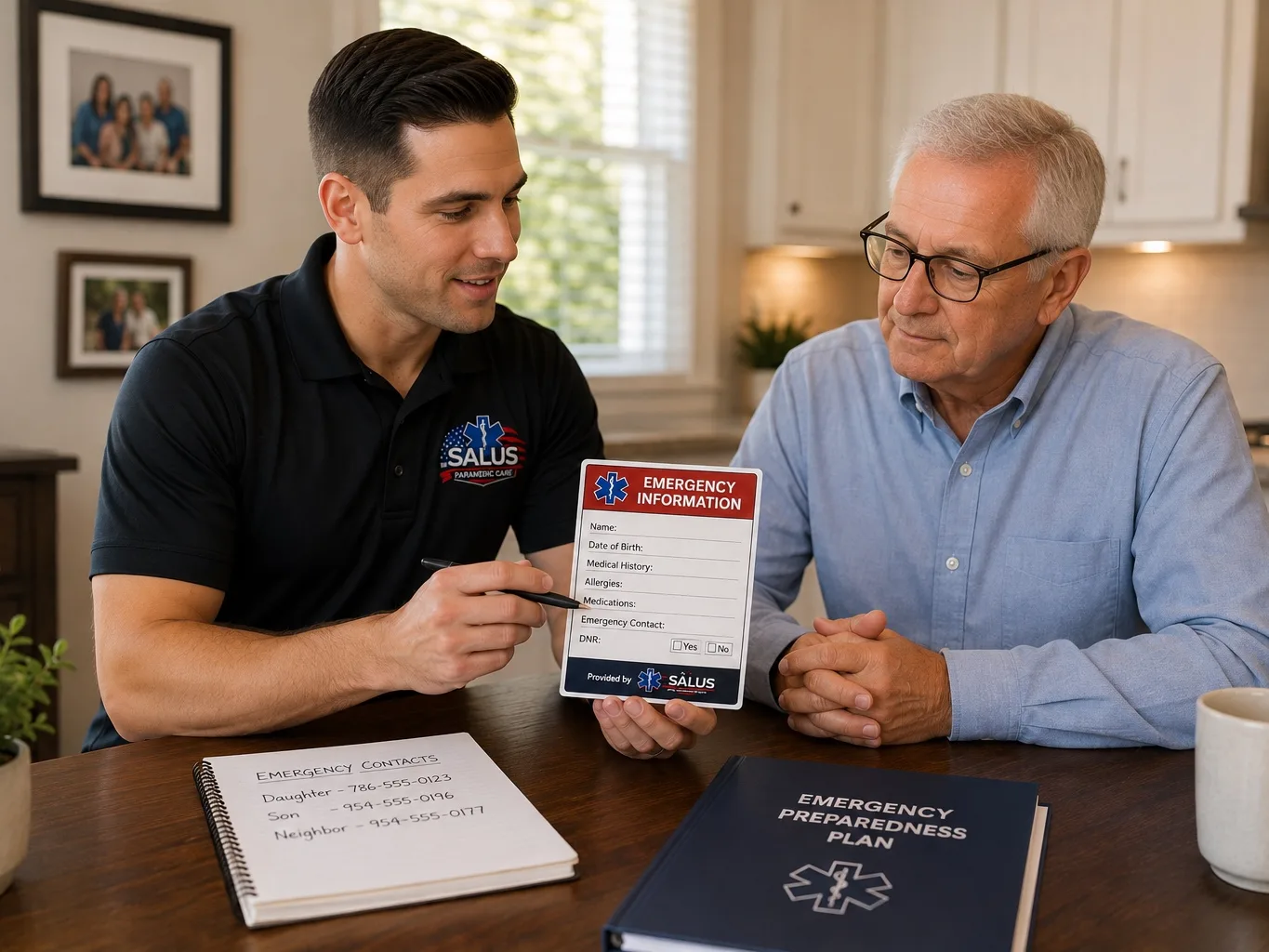
Preventive paramedic care is different from both: scheduled visits from a licensed Firefighter/Paramedic focused on preventing the health crisis — vital signs and trends, medication safety, fall risk, home and fire safety, and post-discharge check-ins. No referral needed. Think of it as an early-warning system for your parent's health and home. Full explainer here.
Which one does your parent need?
- Needs help with bathing, meals, or companionship daily? Home care.
- Recovering from surgery with a doctor's order for nursing or therapy? Home health.
- Independent today — and you want to keep it that way? Preventive paramedic care.
- Just left the hospital? Home health if prescribed — plus a post-discharge paramedic visit to catch medication issues and early warning signs during the risky first month.
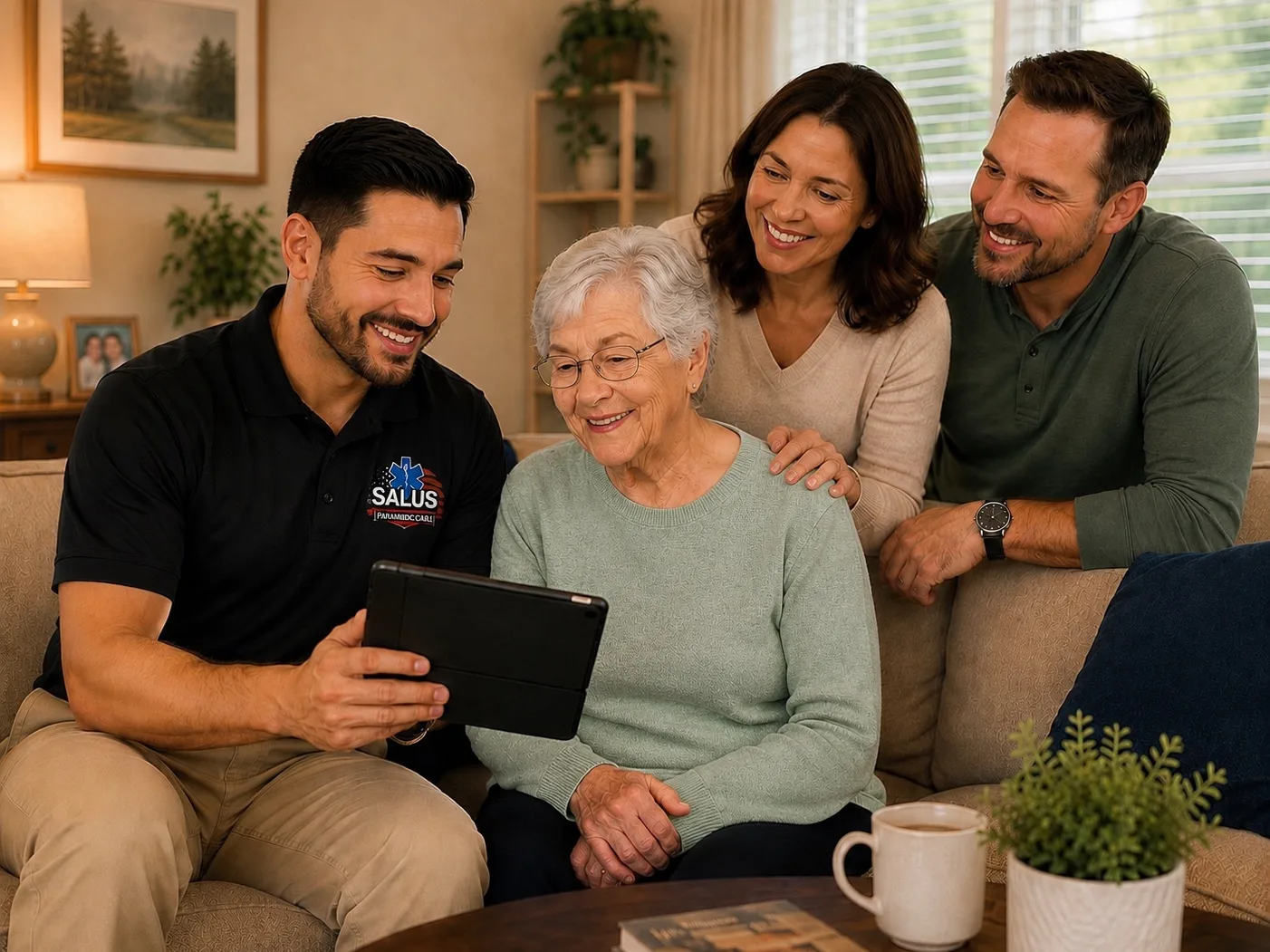
These layers work together. Many Salus families in Miami-Dade and Broward use a caregiver for daily support while Salus provides the clinical eyes — monitoring trends and flagging concerns to the family and physicians before they escalate.
The bottom line
Home care supports daily living. Home health treats what has already happened. Preventive paramedic care works to make sure the next thing never happens. If you're unsure which fits, call us — we'll tell you honestly, even if the answer isn't Salus.
Key takeaways
- Home care = daily living support; home health = doctor-ordered treatment; Salus = prevention
- Preventive paramedic care needs no referral
- The layers combine well — caregiver for daily help, Salus for clinical monitoring
- After a hospital stay, prevention matters most in the first 30 days
Want experienced eyes on your loved one's health and home?
Salus Firefighter/Paramedics visit Miami-Dade & Broward homes to catch problems before they become emergencies. Memberships from $149/month · first visit just $99.
This article is general education, not medical advice. Always consult your loved one's physician about their specific health situation. In an emergency, call 911.