Every hurricane season, South Florida's first responders see the same pattern: seniors who weathered the storm fine — and then ran into trouble in the days after, when the power was out, pharmacies were closed, and family couldn't reach them. Hurricane prep for an older adult is different, and it starts well before a storm has a name.
Medications: the two-week rule
Pharmacies can be closed for days after a major storm. Keep a minimum two-week supply of every prescription through hurricane season, plus a written, current medication list in a waterproof bag. Florida law allows early refills when a storm warning is issued — use it.
Power-dependent medical equipment
Oxygen concentrators, CPAP machines, powered mobility, refrigerated medications like insulin — every one needs a power-outage plan. Options include battery backups, a generator (run outdoors only — carbon monoxide kills more Floridians after storms than the storms do), and registering with FPL's Medically Essential Service program.
The Special Needs Registry
Both Miami-Dade and Broward Counties run Special Needs Registries for residents who need help evacuating or require electricity for medical equipment. Registration is free and should happen before hurricane season — emergency management uses it to prioritize assistance and special-needs shelter placement. If your loved one qualifies, this is the single most important item on this list.
The evacuate-or-stay decision
- Evacuation zones: know the zone (Miami-Dade and Broward both have online lookup maps) — and remember evacuation is usually about storm surge, not wind.
- Mobility reality: if evacuation would take your loved one hours, the decision must be made early, not when the highway is a parking lot.
- Special-needs shelters accept people with medical needs and their caregivers — but most require pre-registration through the registry above.
The after-storm dangers nobody plans for
This is where responders stay busiest: carbon monoxide from generators run indoors or near windows, heat exhaustion in powerless homes (deadly for seniors on certain medications), falls in dark hallways, and spoiled food and medications. Plan for the week after, not just the day of.
A family communication plan
Cell networks fail. Agree in advance: one out-of-state relative as the check-in point, a neighbor who will physically lay eyes on your loved one, and a paper list of phone numbers — because the contacts app dies with the phone battery.
Get the plan checked
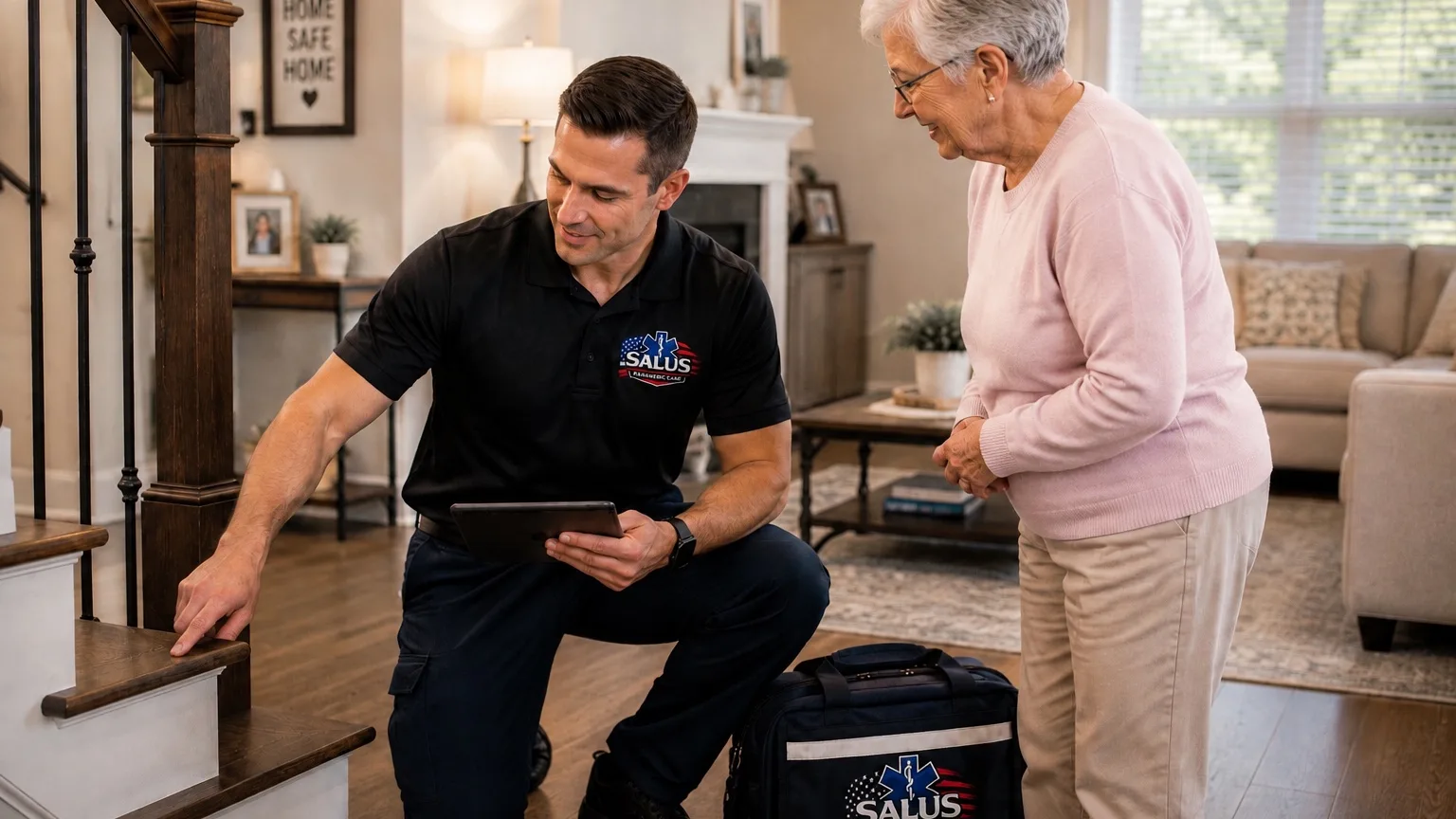
A Salus home safety assessment can include hurricane readiness for clients in Miami-Dade and Broward: equipment power plans, medication stock, evacuation logistics matched to real mobility, and registry enrollment guidance — done calmly in May, not frantically in September.
Key takeaways
- Keep a 2-week medication supply all season; Florida allows early storm refills
- Register for the county Special Needs Registry BEFORE a storm threatens
- Generators run outdoors only — carbon monoxide is the top post-storm killer
- Plan for the powerless week after the storm, not just landfall day
Want experienced eyes on your loved one's health and home?
Salus Firefighter/Paramedics visit Miami-Dade & Broward homes to catch problems before they become emergencies. Memberships from $149/month · first visit just $99.
This article is general education, not medical advice. Always consult your loved one's physician about their specific health situation. In an emergency, call 911.