
Baseline measurements
A full set of vital signs recorded properly, so every later visit has something honest to compare against.
A comprehensive wellness assessment is the full picture of your loved one's health, taken where it matters most — at home. A licensed Firefighter/Paramedic spends 60–90 unhurried minutes evaluating overall health, daily-living function, and the home environment, then gives your family a clear written summary and practical recommendations. It's the ideal starting point for most families, and the foundation every Salus membership builds on.
Start here
A comprehensive wellness assessment is a single 60–90 minute home visit that reviews a person's overall health, how they manage day to day, and whether their home still suits them. One Firefighter/Paramedic gathers the whole picture, writes it down, and hands your family a summary they can take to a physician.
It is the widest visit Salus offers, because it produces the baseline everything afterwards is measured against. Book it standalone, or as the opening chapter of ongoing in-home preventive care in Hialeah and across South Florida.
The components
The flagship visit gathers in one sitting what Salus otherwise performs as separate services, then reads them together.
A full set of vital signs recorded properly, so every later visit has something honest to compare against.
A medication review covering prescriptions, over-the-counter bottles and supplements — including ones nobody thought to mention.
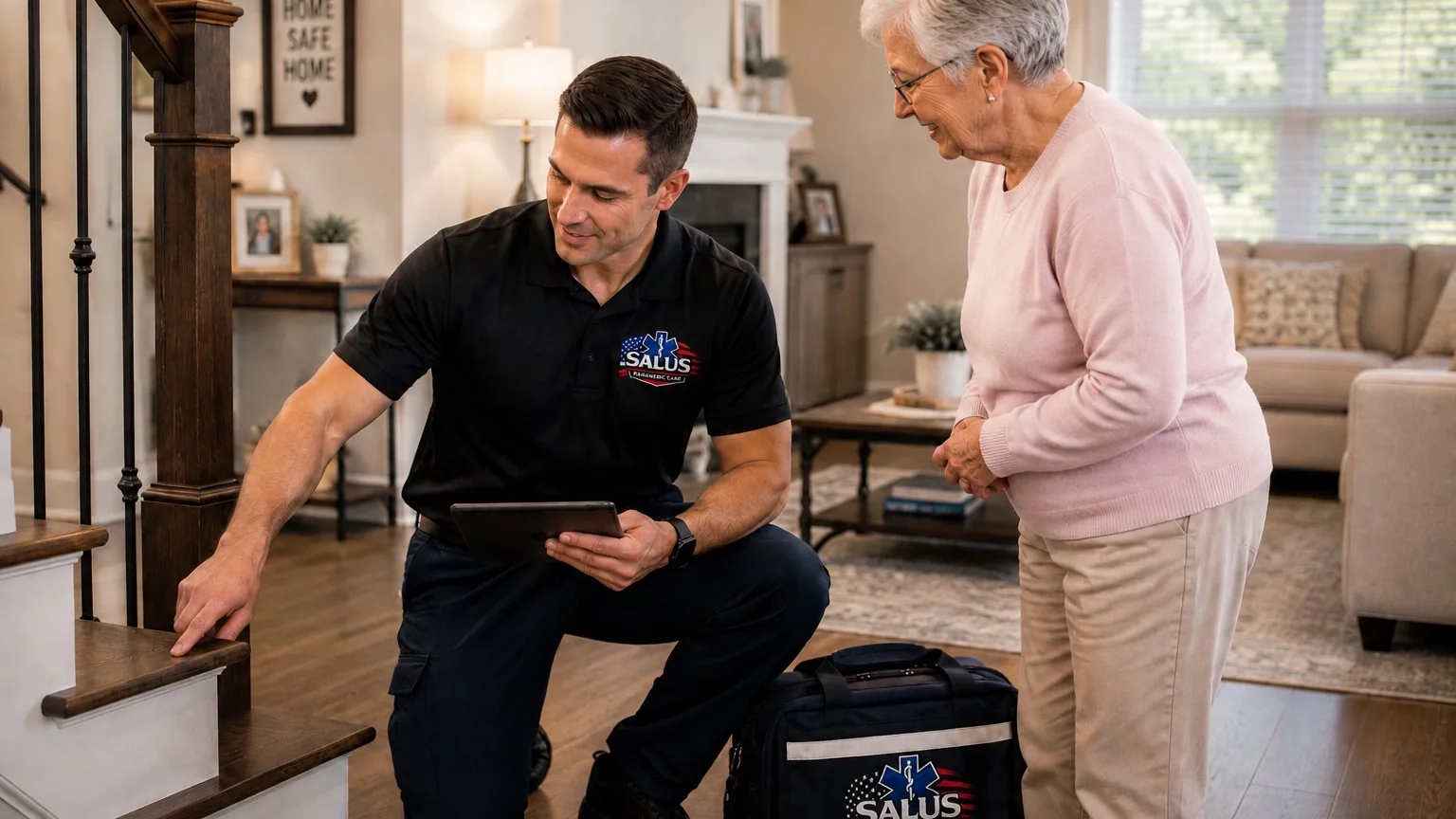
A fall risk assessment that watches how someone actually stands, turns and walks in their own rooms.
A home safety assessment of lighting, thresholds, bathrooms and the routes taken at three in the morning.
Meals, sleep, driving, bathing, company — the parts of a life that rarely come up in a short appointment.
The whole visit
$199 one-time · included in all memberships · See all pricing →
Before the visit
What you take away
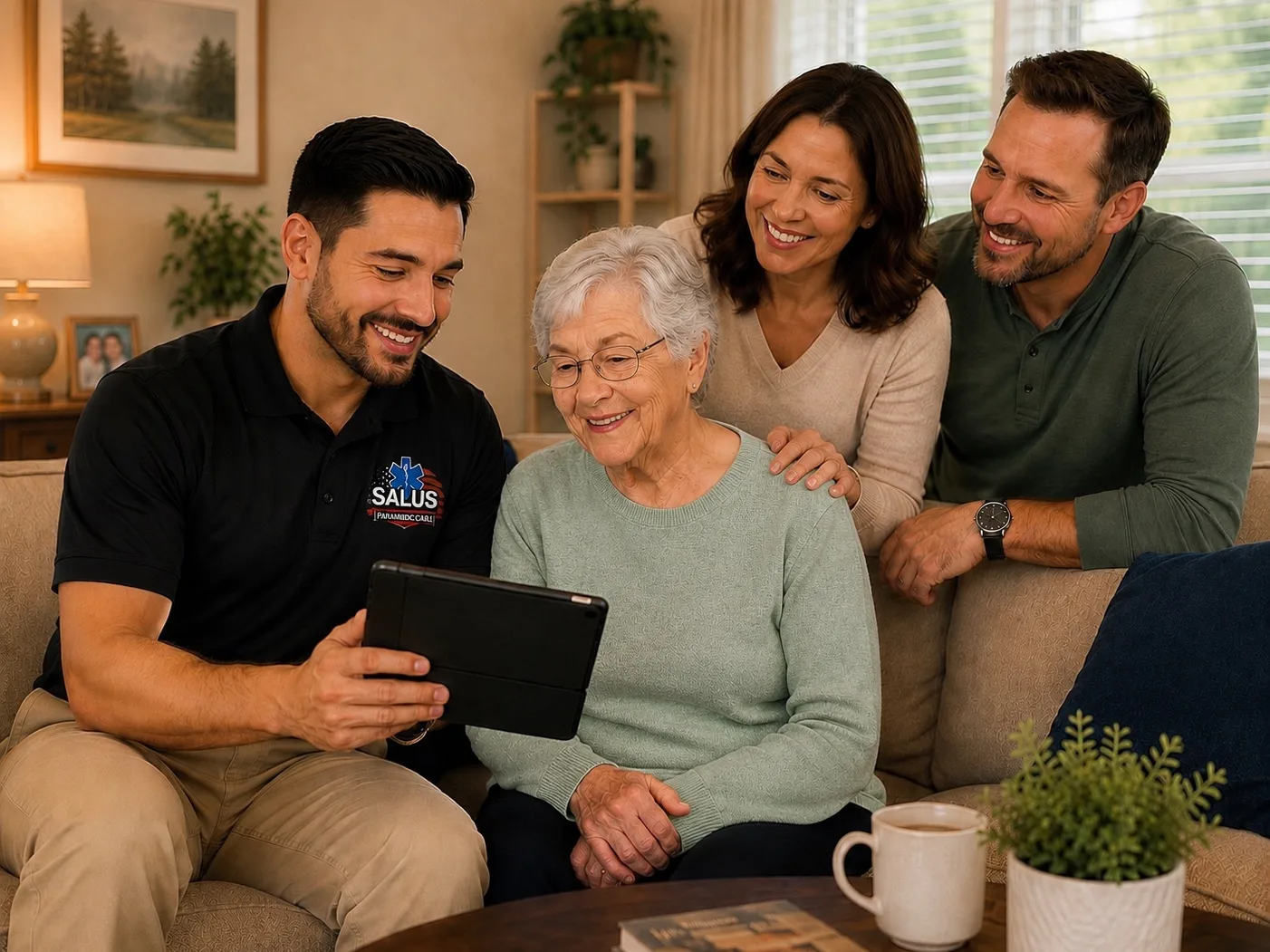
Nothing useful happens if the visit lives only in someone's memory. Every assessment ends in a written document: what was measured, what was observed, what your loved one told us, and practical recommendations ranked by what we would attend to first. It is written in plain English rather than clinical shorthand, so a son in another time zone reads it as easily as a physician's office does. Anything warranting medical attention is set out clearly for their doctor — we flag and refer, we do not diagnose or prescribe.
Who books it
Rarely the person being assessed. Usually the adult child who has been quietly worrying since their last visit home.
A wellness assessment is a planned, unhurried visit — it is not urgent care and does not stand in for it. Anyone with symptoms that could signal an emergency needs 911, not an appointment.
Questions
Most assessments take 60–90 minutes, at your loved one's pace. We never rush a client, and family members are welcome to join in person or by phone.
No. The assessment is available as a one-time visit at $199, and it is also included in all memberships. Many families start with the single visit and decide afterwards.
Common, and usually fair enough. It helps to frame it as a check on the house as much as on her. Our paramedics are used to visits that begin guarded and end over coffee.
We give you the written summary to share, and with your permission we can send it on. Decisions about care stay between your loved one and their physician.
Once a year suits many families, sooner after a hospital stay or a fall. Between assessments, shorter wellness monitoring visits keep the picture current.
Where this model sits between a doctor's office and an ambulance.
What has to be true for staying at home to keep working.
Start with a $99 introductory visit — no membership required, no pressure, honest answers.