Here's a statistic that shapes how we think at Salus: adults over 65 are more than twice as likely to be killed in a home fire as the general population — and over 85, that risk roughly quadruples. (US Fire Administration) Slower reaction times, mobility limits, and medications that deepen sleep all play a part. So does one very fixable problem: the state of the home itself.
Start with the smoke alarms — really
Three questions we ask in every home: Are there alarms in every bedroom, outside sleeping areas, and on every level? Do they actually work today? Are they less than 10 years old? (Check the manufacture date on the back — alarms expire.) For hard-of-hearing residents, bed-shaker and strobe alarms exist and work.
The kitchen is where it starts
Unattended cooking is the leading cause of home fires. For seniors, the pattern is painfully consistent: something on the stove, a moment of forgetfulness, a trip to another room. Practical fixes include stove timers, automatic shut-off devices, and the simple family rule: never leave the kitchen with a burner on.
The overloaded outlet problem
Older Florida homes plus space heaters, power strips daisy-chained together, and decades-old wiring is a combination firefighters know too well. Warm outlets, flickering lights, and frequently tripped breakers are warnings — not quirks.
An escape plan that matches real mobility
A standard escape plan assumes you can move quickly and use stairs. For someone with a walker, arthritis, or oxygen equipment, the plan has to be personal: which exit is realistic, where glasses and mobility aids sit at night, how to alert neighbors, and whether the local fire department should know a resident needs assistance evacuating.
Oxygen users: a special word
Home oxygen saves lives and dramatically accelerates fire. No smoking, no open flames, and no petroleum-based products anywhere near it. Signs for the door exist for a reason — responders need to know oxygen is in the home.
Get a firefighter's eyes on it
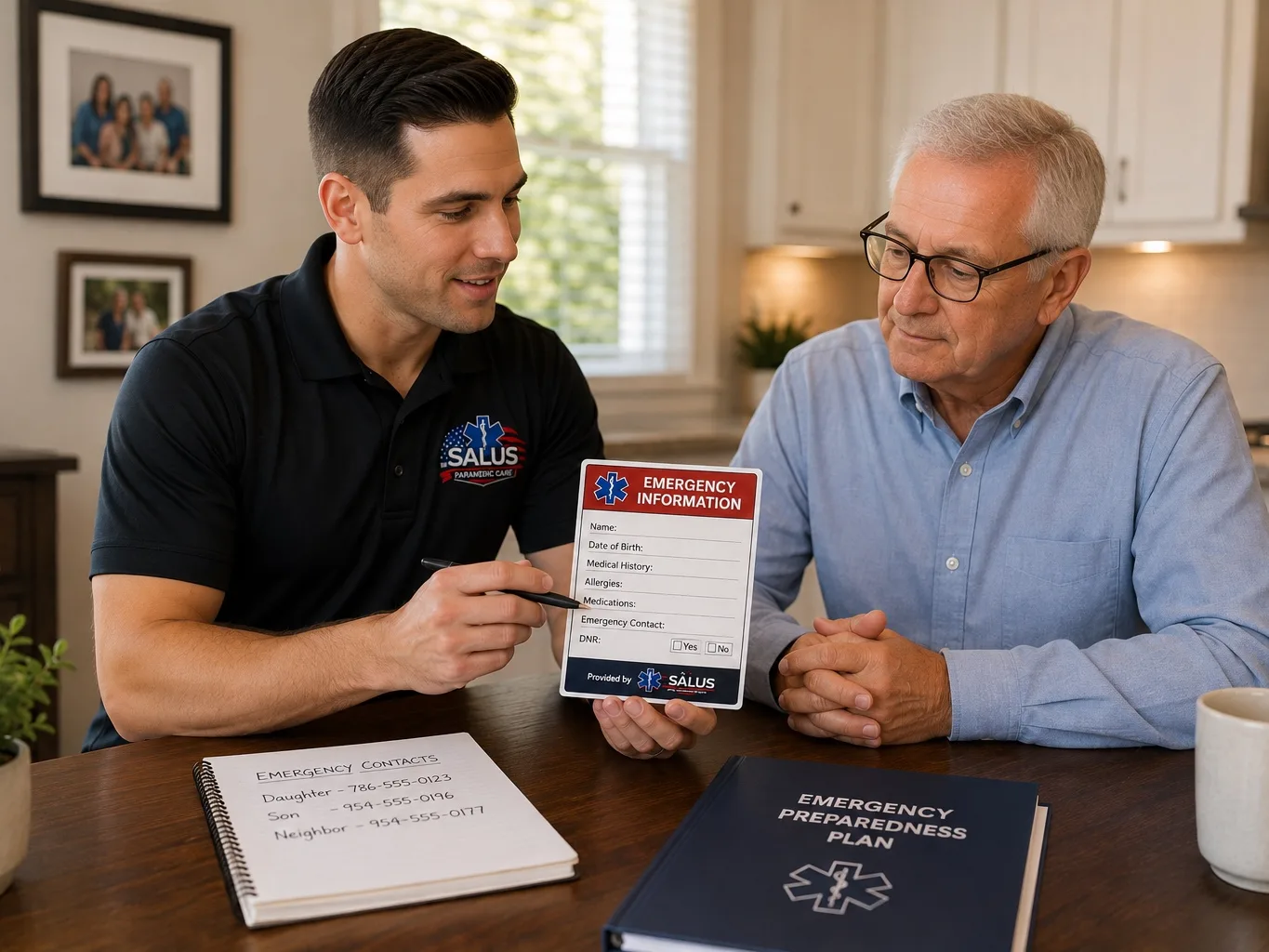
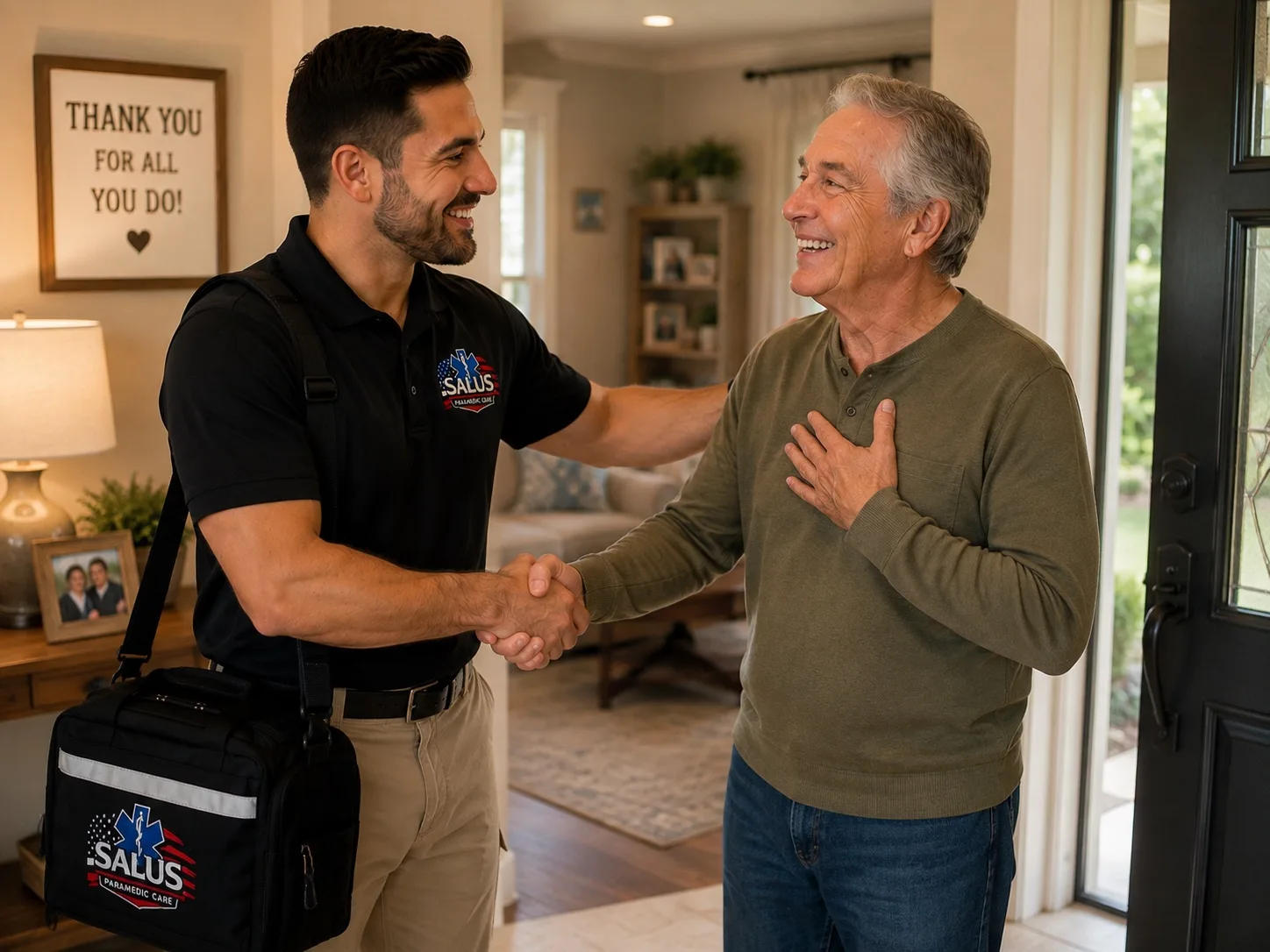
This is the assessment we're most proud to offer, because it's the one nobody else does: an actual firefighter walking your loved one's home, testing alarms, spotting hazards, and building a personalized escape plan they can realistically follow.
Key takeaways
- Seniors face 2–4× higher fire fatality risk — most of it preventable
- Test alarms monthly; replace any alarm over 10 years old
- Cooking and overloaded outlets cause most senior home fires
- Escape plans must match real mobility, not ideal mobility
Want experienced eyes on your loved one's health and home?
Salus Firefighter/Paramedics visit Miami-Dade & Broward homes to catch problems before they become emergencies. Memberships from $149/month · first visit just $99.
This article is general education, not medical advice. Always consult your loved one's physician about their specific health situation. In an emergency, call 911.