
Fall Risk Assessment
Balance, gait and strength tested in the person's own hallway, then matched against the unit: bathroom transfers, the lanai step, rugs on tile, the 3 a.m. route to the bathroom.
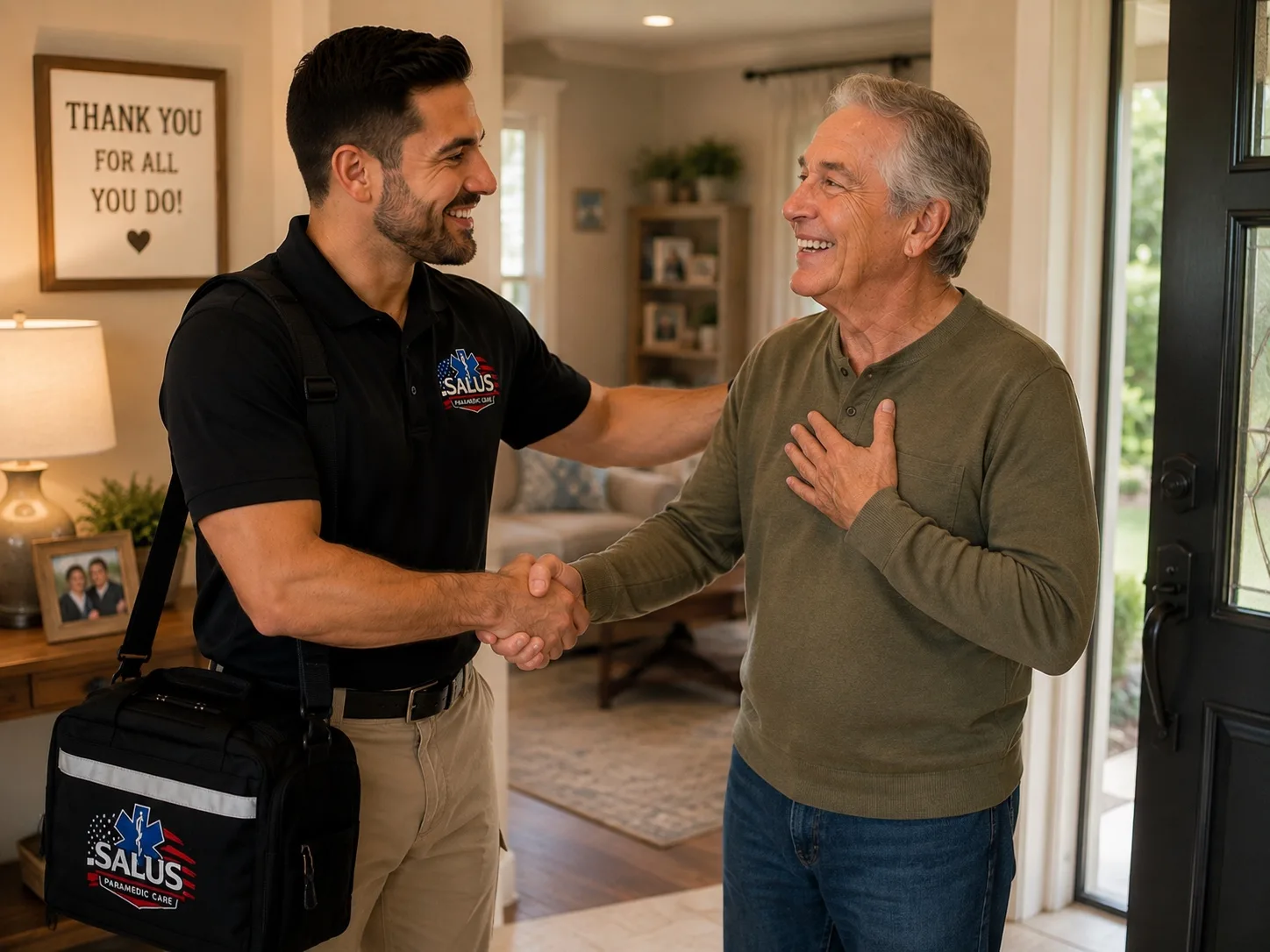
Roughly one in five Sunrise residents is 65 or older, and just under a quarter of those older residents live alone. Salus sends a Firefighter/Paramedic to the home on a date you pick — no emergency, no ambulance — to take vital signs, review medications and walk the unit for hazards, then put it in writing.
Between appointments
A physician who sees a Sunrise patient every few months gets one set of numbers, taken in a clinic after a drive and a wait in a lobby. That reading is real, but it is a single point. A home series on ordinary days gives a slow upward drift, or a new swing between readings, a chance to be noticed.
On a vital signs monitoring visit the paramedic logs pressure, pulse, oxygen level, temperature and breathing rate against earlier visits, asks about dizziness on standing, and notes which medications were actually taken that morning. A value outside the person's usual range is flagged for the physician to interpret; we do not diagnose or adjust medication. Our guide to a parent's blood pressure numbers explains why one high reading is rarely the whole story.
Condominium living in Sunrise
Sunrise is a condominium city: Sunrise Lakes Phase 3 alone describes itself as a 55+ active senior community of ninety-three buildings. With the median Sunrise home dating from 1983, many units are entering their fifth decade.
What you receive
Around a third of older Sunrise residents live with a disability, and the reader is often an adult child in Weston, Davie or another state. The summary is written for that reader, in plain language, with identical copies to the client and whoever they authorise.
Most requested
Balance, gait and strength tested in the person's own hallway, then matched against the unit: bathroom transfers, the lanai step, rugs on tile, the 3 a.m. route to the bathroom.
Detectors, the stove and toaster area, extension cords behind furniture, oxygen tubing near heat, and a realistic escape route for someone who cannot take the stairs quickly.
HCA Florida Westside Hospital and its 24-hour emergency department sit in neighbouring Plantation. Whichever hospital your parent comes home from, we compare vitals with the discharge paperwork and sort new prescriptions from old in the first days.
The rest of the Salus range is available in Sunrise on the same terms: a comprehensive wellness assessment covering person and home together, a shorter primary health assessment, a stand-alone medication review, a neurological screening, a room-by-room home safety assessment, and ongoing wellness monitoring. We also visit the communities adjoining Sunrise — Plantation, Tamarac, Lauderhill, Davie and Weston — with pages for Tamarac, Plantation, Fort Lauderdale and Coral Springs. Full list: service areas.
Please read
Nothing about Salus is an emergency service. Crushing chest pain, new confusion, a drooping face, breathing that has become hard work, or a fall with a possible head or hip injury need 911, not a booking. Broward's 911 system and the emergency departments around Sunrise exist for those moments; a Salus appointment belongs to the quiet days between them.
Sunrise questions
Yes. Gated entrances and guest registration are simply part of visiting Broward condominiums. Tell us the community and phase when you book, and we will ask you or the resident to add our paramedic to the gate list for the appointment window. The visit itself happens inside the unit.
We can schedule a visit before a storm to review medication supply, powered equipment and the stairwell question for upper-floor units, and again once roads reopen. We cannot perform welfare checks during a storm or an active outage — that is what 911 is for.
They may be, and that difference is itself useful to his physician. We take readings seated and rested in his own chair, record the time and whether his morning medication was taken, and log them alongside earlier visits. Interpreting the series and changing treatment remains the cardiologist's call.
Both, if you book a comprehensive wellness assessment. The person is examined first — vitals, mobility, medications, how they are really managing — then the paramedic walks the unit with them: bathroom, kitchen, sliding door, lanai, smoke alarm, route to the exit. Single-focus visits are also available.
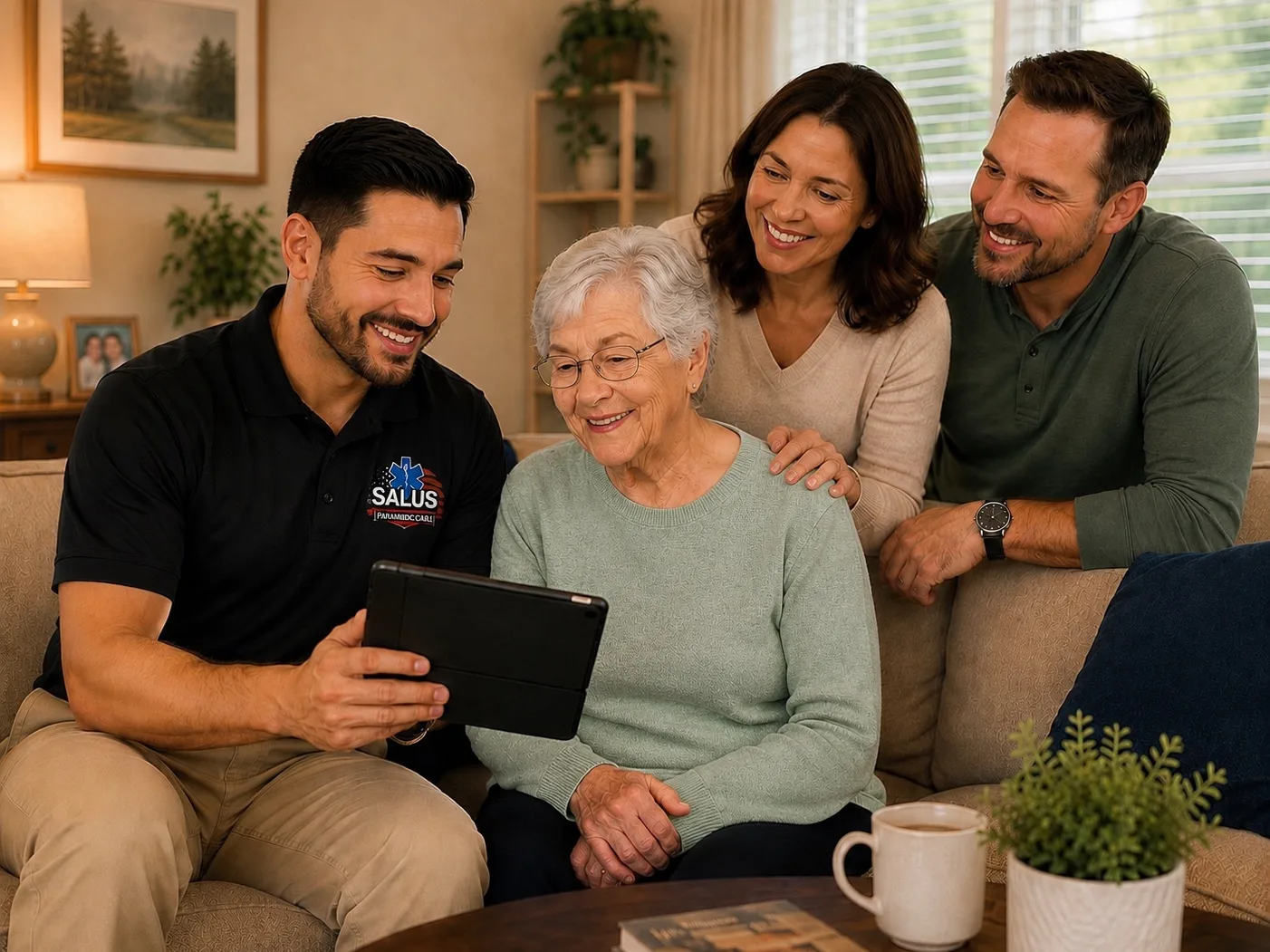
Your mother receives it, and so does anyone she authorises at booking — typically the adult child who arranged the visit, sometimes a neighbour who checks in. Nearly a quarter of Sunrise residents over 65 live alone, so that authorisation step is built into every first appointment.
Related reading
The two figures explained, plus how a home series helps the physician more than a lone reading.
Medication supply, powered equipment, upper-floor units and whether to evacuate, worked through for families.
A first visit is $99 — one uniformed Firefighter/Paramedic, one unhurried appointment, one written summary you can act on.